AC Compressor Replacement Cost in Miami
A failing compressor is the most expensive single AC repair. In Miami, compressor replacement runs $800 to $2,500 or more — and that cost often tips the financial math toward replacing the entire system instead. Here is what you need to know before deciding.
- Compressor replacement in Miami: $800 to $2,500+ depending on size and brand
- Systems over 8 years old often warrant full replacement instead
- R-410A availability now affects repair economics on older systems
- Free diagnostic visit with repair — $0 service call fee
Why Compressor Failure Is a Decision Point
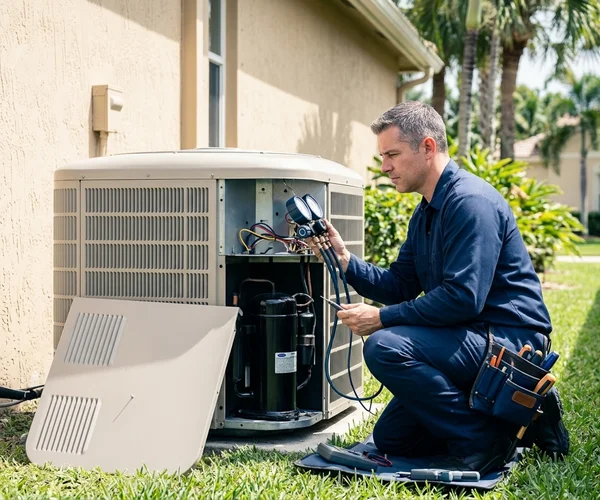
The compressor is often described as the heart of an air conditioning system. It circulates refrigerant through the system and is responsible for the actual work of moving heat from inside your home to outside. When the compressor fails, the system produces no cooling — and the repair cost is substantial enough that it forces a genuine financial decision.
In Miami, compressor replacement costs range from roughly $800 for a smaller single-stage unit to $2,500 or more for a large variable-speed compressor on a multi-ton system. Labor, refrigerant, and any required secondary repairs add to that base cost. On a system that is 8 years old or more in South Florida's climate, that expense often does not pencil out compared to replacing the full system with a new, warranted, high-efficiency unit.
This guide explains the cost range in detail, walks through the factors that affect it, and provides the decision framework that helps Miami homeowners choose between compressor repair and full system replacement. We also explain how the R-410A refrigerant phaseout is changing this calculation.
Understanding the Cost and the Decision
What Drives Compressor Replacement Cost
The largest variable in compressor replacement cost is the compressor itself. A standard single-stage compressor for a 2-ton residential system costs $300 to $700 in parts alone. A variable-speed or scroll compressor for a larger or higher-efficiency system can cost $600 to $1,400 or more. Labor for the replacement — which includes recovering existing refrigerant, removing the failed compressor, installing the new one, evacuating the system, and recharging — adds $300 to $600 in labor in the Miami market.
Refrigerant cost is the third significant variable and one that has changed in recent years. R-410A, the refrigerant used in most systems installed before 2025, was phased out of US production in January 2025. While stockpiles remain available, prices have increased substantially. A system that requires a full recharge after compressor replacement may face $150 to $400 or more in refrigerant cost alone, depending on system size and the amount of refrigerant lost before the compressor failed.
Additional factors include whether the failed compressor damaged other components. A compressor that fails catastrophically can send metal fragments into the refrigerant lines and coils — a situation called a burnout. When this happens, the refrigerant circuit must be thoroughly flushed and sometimes additional components replaced, which can add $300 to $800 to the total job cost. Burnouts are more common in systems that ran with low refrigerant or overheated repeatedly before the final failure.
The Repair vs. Replace Decision Framework
The standard industry benchmark is the 5000 rule: multiply the system's age in years by the total repair cost. If the result exceeds $5,000, replacement is typically the better financial choice. For a 9-year-old Miami system facing a $1,200 compressor replacement, the product is 10,800 — well past the threshold. For a 4-year-old system, the same repair totals 4,800 — within the range where repair is reasonable, especially if the system is still under a manufacturer's compressor warranty.
Manufacturer warranties are a key variable. Many compressor warranties run 5 to 10 years. If the compressor is still within its warranty period, the part cost may be covered — leaving only labor and refrigerant as out-of-pocket expenses. This dramatically changes the math. Always check the system's installation date against the manufacturer's warranty terms before assuming the full replacement cost applies.
The R-410A situation creates an additional consideration for older systems. A 2015 system running on R-410A that needs a compressor replaced will also need a refrigerant recharge with increasingly expensive R-410A. That same system cannot be upgraded to the newer R-454B refrigerant without significant modifications — it was designed for R-410A. Replacing the entire system with a new R-454B-compatible unit eliminates the refrigerant cost uncertainty going forward while also delivering modern efficiency ratings and a new full warranty.
Factors That Determine Your Compressor Cost
Understanding these variables helps you evaluate any quote you receive.
System Tonnage
Larger systems require larger compressors. A 1.5-ton unit uses a smaller, less expensive compressor than a 4-ton or 5-ton system. Tonnage is listed on the data plate of your outdoor unit.
Compressor Type
Standard single-stage compressors are the least expensive to replace. Two-stage and variable-speed (inverter) compressors cost more in parts but deliver significantly better efficiency when running.
Warranty Coverage
Systems under an active manufacturer's warranty may have the compressor part covered, reducing out-of-pocket cost to labor and refrigerant only. Check the installation date and original paperwork.
Refrigerant Type and Amount
R-410A systems face higher refrigerant recharge costs due to the 2025 production phaseout. R-454B systems use more readily available refrigerant. The recharge amount depends on system size.
Burnout Damage
If the failed compressor sent debris into the refrigerant circuit, additional flushing and component replacement may be required. A technician will identify this during the diagnostic visit.
System Age and Condition
On systems over 8 years old in Miami's climate, the 5000 rule calculation often favors replacement. A technician can evaluate the overall system condition alongside the compressor repair estimate.
Miami Homeowners on the Repair vs. Replace Decision
"Rocket walked me through exactly which FPL rebate my new system qualified for. The compressor on my 10-year-old unit had failed and replacing the whole system just made more financial sense. They laid out the numbers clearly."
Thomas W.
"I was skeptical that replacing the whole system was really better than just fixing the compressor. Rocket explained the math clearly — the warranty, the R-410A cost, the efficiency savings. It was an easy call once I saw the full picture."
Victor L.
Compressor Replacement Questions
Related Guides and Services
-
AC Repair Service
Schedule a diagnostic visit to assess your compressor. $0 service call fee with repair from Rocket HVACR.
-
AC Replacement Service
When replacement is the better financial decision, Rocket HVACR provides free quotes with 0% APR financing available.
-
Signs You Need AC Replacement
Understand all the signals that indicate a system has reached the end of its cost-effective service life.
-
Why Is My AC Not Blowing Cold Air?
A failed compressor is one cause. This guide covers the full range from simple fixes to major repairs.
-
HVAC Financing
0% APR for 24 months makes full system replacement affordable when compressor repair no longer makes sense.
Get an Honest Compressor Assessment in Miami
Rocket HVACR will diagnose your compressor failure and give you a straight comparison of repair vs. replacement costs — including current R-410A pricing, warranty status, and financing options. $0 service call with repair. 24/7 availability.
Schedule a Diagnostic VisitOr call us directly: (786) 716-1245