Why Is My AC Not Blowing Cold Air in Miami?
When your air conditioner is running but your home stays hot, the cause ranges from a simple filter swap to a failed compressor. In Miami's heat, this is not a problem you can wait on. Here is how to diagnose what is wrong.
- Some causes are simple DIY fixes — others need a licensed technician
- Low refrigerant is the most common professional repair
- Failed compressor may signal it is time to replace the system
- 24/7 emergency response with 2-hour target arrival
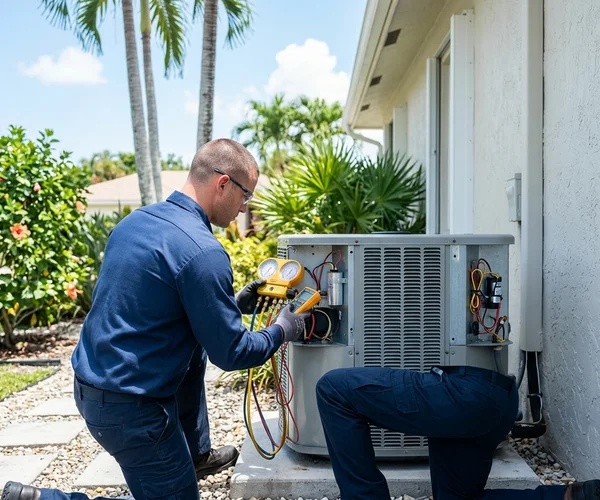
AC Running But Not Cooling: Why Context Matters in Miami
An air conditioner that runs but does not cool is one of the most common HVAC complaints in South Florida. The causes span a wide range — from a clogged filter that costs nothing to replace, to a failed compressor that may cost more to repair than the system is worth. Knowing which category you are dealing with determines whether you reach for your wallet or call a technician.
Miami's heat adds urgency to any cooling failure. When outdoor temperatures exceed 90 degrees and humidity is above 70 percent, a home without working air conditioning becomes genuinely hazardous within hours, especially for children, elderly residents, and anyone with respiratory conditions. This is not a problem that benefits from a wait-and-see approach.
The good news: many causes of reduced cooling are diagnosable with a quick inspection, and some can be addressed without a service call. This guide walks through the most common causes in order of likelihood and how to determine which one is affecting your system.
Common Causes: From Simple to Serious
Causes You Can Check Yourself
Start with the filter. A severely clogged air filter restricts airflow so significantly that the evaporator coil cannot absorb heat properly. In Miami's year-round operation, filters that should be changed monthly are often left for three to six months. Pull the filter out — if it is grey and visibly clogged, replace it before calling anyone. Run the system for thirty minutes after replacing the filter and check if cooling improves.
Next, check the thermostat settings. It sounds obvious, but thermostat mode accidentally switched to fan-only instead of cooling is a common cause of complaints. Verify the mode is set to cool, the set temperature is below the current room temperature, and — if you have a smart thermostat — that no scheduled override is active. Also check that the outdoor condenser unit is running. If the indoor unit runs but the outdoor unit is silent and not spinning, you have an outdoor unit problem.
Finally, check whether the outdoor condenser coils are visibly blocked. Overgrown vegetation, accumulated debris, or a hose that has been run too close can all restrict the condenser's ability to expel heat. A blocked condenser causes the entire refrigeration cycle to back up and lose efficiency. Clear vegetation at least two feet back from the unit on all sides.
When You Need a Licensed Technician
If the filter is clean and the condenser is running but cooling is still inadequate, the most likely cause is low refrigerant from a leak. Refrigerant does not deplete naturally — a system low on refrigerant has a leak that must be located and repaired before adding more refrigerant. Federal law prohibits simply topping off a leaking system and releasing refrigerant into the atmosphere. Repair requires leak detection, fixing the leak, and then recharging to the correct level.
A frozen evaporator coil is another common cause that requires professional attention. If you see ice forming on the indoor air handler — usually on the refrigerant lines or the coil housing — shut the system off and let it thaw before calling for service. Running a frozen coil can damage the compressor. The freeze is usually caused by restricted airflow (dirty filter or low refrigerant) rather than a standalone coil problem.
The most serious cause is a failed compressor. The compressor is the heart of the refrigeration cycle — if it fails, no cooling is possible. Signs pointing to compressor failure include the outdoor unit humming or clicking without the fan spinning, a circuit breaker tripping when the AC turns on, or a technician's diagnosis. Compressor replacement in Miami runs $800 to $2,500 and may not be the best financial decision for systems over 8 years old.
Quick Cause Identification Guide
Match your symptoms to the most likely cause before calling for service.
Fan Blowing But No Cold Air
Most likely a dirty filter blocking airflow, thermostat set to fan-only, or the outdoor unit not running. Check all three before calling a technician.
System Running but Barely Cooling
Low refrigerant due to a leak is the most common professional diagnosis. The system runs but cannot achieve proper cooling capacity at reduced refrigerant levels.
Ice on the Indoor Unit or Lines
A frozen evaporator coil. Shut the system off to let it thaw, check the filter, and schedule service. Running a frozen system risks compressor damage.
Outdoor Unit Not Running at All
Could be a tripped breaker, a failed capacitor, or a failed compressor. Check the breaker first. If it resets but trips again, call a technician — do not reset repeatedly.
AC Trips the Breaker When It Turns On
A consistently tripping breaker under AC load suggests a failing compressor drawing excessive current. This requires immediate professional diagnosis.
Cooling Works but House Never Reaches Set Temperature
Could be an undersized system, significant duct leakage, poor insulation, or a refrigerant charge that is slightly off. A performance check will identify the specific cause.
Miami Homeowners on Rocket HVACR AC Repair
AC Not Cooling: Frequently Asked Questions
Related Guides and Services
-
AC Repair Service in Miami
Schedule professional AC repair with Rocket HVACR. $0 service call fee with repair. 24/7 emergency response.
-
Signs You Need AC Replacement
When a repair is not worth the cost, here are the signs that replacement is the smarter financial decision.
-
AC Compressor Replacement Cost
Real Miami price ranges for compressor replacement and help deciding between repair and full system replacement.
-
How AC Leak Repair Works
Learn what refrigerant leak detection and repair involves, and why topping off a leaking system is not a solution.
-
How Often Should You Get an AC Tune-Up?
Many no-cooling events are preventable with regular maintenance. Learn the right schedule for Miami's climate.
AC Not Cooling? Rocket HVACR Responds 24/7
Do not wait out Miami heat without working AC. Rocket HVACR operates around the clock with a 2-hour emergency response target. $0 service call fee with any repair. First-time customers save $50.
Get Emergency Help NowOr call us directly: (786) 716-1245