Signs You Need AC Replacement in Miami
Every air conditioner reaches the point where continued repairs cost more than a new system would. In Miami-Dade, that threshold arrives faster than in cooler climates. Here is how to recognize it and what to expect when you replace.
- Systems over 10 years old in Miami are near end of useful life
- The 5000 rule helps you compare repair vs. replacement cost
- R-410A phaseout is changing the refrigerant cost calculation
- Free quotes on replacement — financing available at 0% APR
Why Miami Systems Wear Out Faster
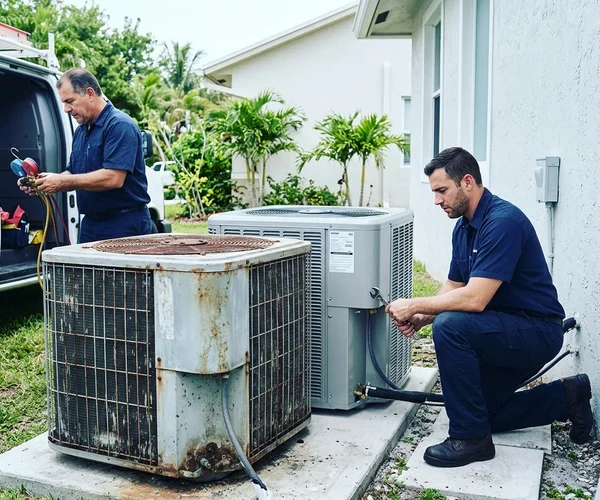
A residential AC system in the northern United States might last 15 to 20 years with proper maintenance. In Miami-Dade, where the same system runs 10 to 12 months per year instead of 4 to 5, that effective lifespan compresses to 10 to 14 years. More runtime means more wear on compressors, coils, capacitors, and refrigerant connections — and it means the replacement decision arrives sooner.
The challenge is that aging systems do not fail suddenly in most cases. They degrade gradually: slightly higher electric bills, slightly longer run times, slightly more repair calls. Each individual symptom seems manageable. But added together, they describe a system that is costing its owner significantly more than a replacement system would.
This guide outlines the specific signs that indicate your system has reached that threshold. We also explain the R-410A refrigerant situation and how it affects the economics of repairing older systems.
The Repair vs. Replace Decision Framework
The 5000 Rule for Miami Homeowners
The 5000 rule is a widely used heuristic for the repair-vs-replace decision: multiply the system's age in years by the cost of the proposed repair in dollars. If the result exceeds $5,000, replacement is almost always the better financial choice. For a 10-year-old system facing a $600 repair, the result is 6,000 — past the threshold. For a 5-year-old system facing the same repair, the result is 3,000 — repair is reasonable.
In Miami, the effective age calculation should account for runtime rather than calendar years. A system that has been running 10 to 12 months per year for 8 years has accumulated the equivalent runtime of a 16-to-20-year-old system in a temperate climate. If your system has been in service for 8 or more Miami years and is facing a major repair, apply the 5000 rule aggressively.
The R-410A refrigerant phaseout adds another factor. R-410A production in the United States was phased out as of January 2025. Existing stockpiles are available but prices are rising significantly. A system that uses R-410A and requires refrigerant work — a leak repair and recharge, for example — now faces a higher refrigerant cost than the same repair would have cost two years ago. That changes the repair economics meaningfully.
What to Expect from the Replacement Process
AC replacement in Miami involves removing the old system, sizing and installing the new equipment, pulling permits as required by Florida law, and verifying system performance before completion. A properly sized replacement is not just a swap — it involves confirming that the new system's tonnage matches your home's heat load, which may have changed due to home improvements, added square footage, or updated Manual J calculations.
Florida now requires new systems to meet SEER2 efficiency minimums — currently 15 SEER2 for split systems in the Southeast. Many homeowners choose systems in the 17 to 20 SEER2 range to maximize FPL rebate eligibility and reduce monthly operating costs. Rocket HVACR will walk you through the efficiency tier that makes the most sense for your home and budget.
Financing is available at 0% APR for 24 months on qualifying systems. For a $10,000 system, that is approximately $417 per month — often comparable to or lower than the combined cost of escalating repair bills and inflated electric bills from an inefficient aging system. We also help identify any applicable FPL rebates that can reduce the net cost of replacement.
Key Signs Your AC Needs Replacement
If multiple items on this list apply to your system, the replacement conversation is worth having.
System Is 10 or More Years Old
In Miami's climate, a 10-year-old system has likely accumulated 15+ years of equivalent runtime. At this age, major component failures become increasingly likely and frequent.
Repair Costs Are Escalating
A second or third significant repair within 24 months is a clear signal. Apply the 5000 rule: age times repair cost. If the result exceeds $5,000, replacement is typically the better financial decision.
System Uses R-410A Refrigerant
R-410A production was phased out in the US as of January 2025. Systems requiring refrigerant work now face higher refrigerant costs. This meaningfully changes the economics of leak repairs on older systems.
Significantly Higher Electric Bills
An aging system loses efficiency year over year. If your FPL bills have increased noticeably without a change in usage, the system is working harder than it should to maintain the same output.
Humidity Problems Indoors
An AC system that struggles to control humidity — leaving the home feeling sticky even at the target temperature — is often undersized, declining in capacity, or failing to run long enough cycles to dehumidify properly.
Comfort Is Inconsistent
Hot rooms, temperature swings, or a home that never quite reaches the thermostat set point despite the system running continuously all indicate declining system capacity.
Miami Homeowners on the Replacement Decision
AC Replacement Questions for Miami Homeowners
Related Guides and Services
-
AC Replacement Service
Schedule a free replacement quote with Rocket HVACR. Financing available at 0% APR for 24 months.
-
AC Compressor Replacement Cost
Understand compressor replacement pricing and when it makes more sense to replace the full system.
-
What SEER2 Means in Florida
Learn what Florida's SEER2 minimum means for your replacement purchase and how it affects your electric bill.
-
How FPL Rebates Work
Qualify for FPL rebates on your new high-efficiency system and reduce the net cost of replacement.
-
HVAC Financing
0% APR for 24 months on qualifying system replacements. Make the right decision without the full upfront cost.
Get a Free AC Replacement Quote in Miami
Rocket HVACR provides honest replacement assessments — we will tell you when a repair still makes sense and when it does not. 0% APR financing for 24 months. FPL rebate assistance included. Licensed Florida contractor CMC1251543.
Request a Free QuoteOr call us directly: (786) 716-1245